Finding the right wholesale supplier for Amazon is one of the most important steps for starting a successful Amazon business. Many beginners think Amazon selling is only about uploading products and waiting for orders, but the real game starts before that: product sourcing. A good supplier can help you get quality products, better prices, proper invoices, and stable stock. A bad supplier can create problems like fake products, late delivery, low profit margin, or even Amazon account issues.
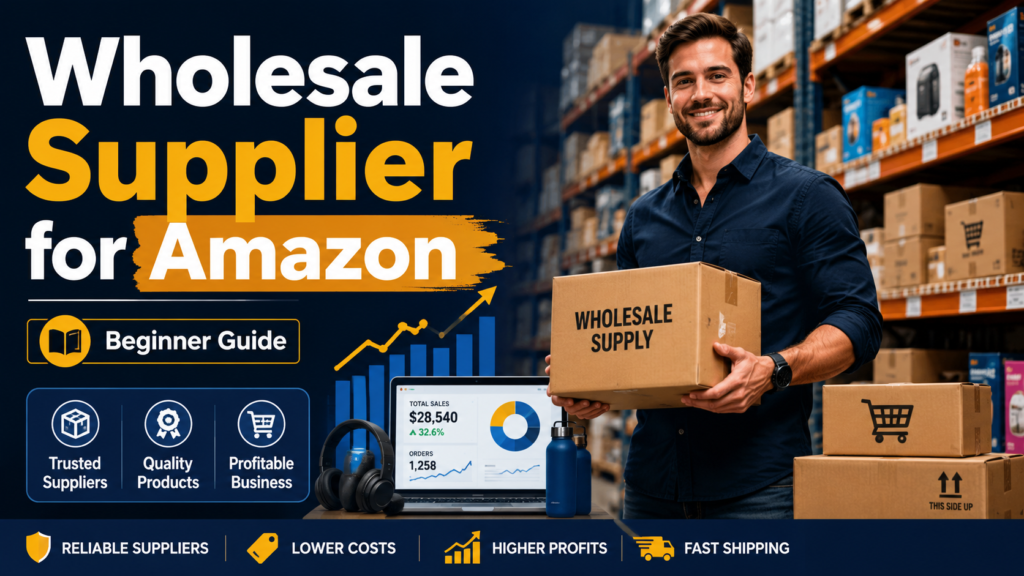
Amazon wholesale means buying products in bulk from a brand, manufacturer, or authorized distributor and then selling them on Amazon for profit. Amazon’s own selling resources explain that wholesale sellers should create listings in Seller Central and keep invoices ready for products that may need approval.
What Is a Wholesale Supplier for Amazon?
A wholesale supplier is a company or distributor that sells products in bulk at lower prices. You buy products from them and resell those products on Amazon. For example, instead of buying one item for retail price, you buy 50, 100, or 500 units at a wholesale rate. This gives you a better chance to earn profit after Amazon fees, shipping, storage, and advertising costs.
A real wholesale supplier is not just any random online seller. For Amazon, the best option is usually a brand-authorized distributor or the brand itself. This is important because Amazon may ask you to prove that your products are genuine. Amazon says invoices help verify that sellers are sourcing products from legitimate suppliers.
Why Supplier Selection Matters on Amazon
Amazon is a trust-based marketplace. Customers expect original products, fast delivery, and accurate product details. If you source from an unreliable supplier, you may face product complaints, negative reviews, returns, or listing restrictions.
A good wholesale supplier helps you with:
Quality products
Proper invoices
Stable inventory
Better pricing
Brand authorization
Long-term business growth
Amazon Seller University is also available as a free educational resource where sellers can learn about listing, pricing, fulfillment, and advertising.
How to Find Wholesale Suppliers for Amazon
The first method is to contact brands directly. Choose a product category, search for brands, visit their official websites, and ask if they offer wholesale accounts. Some brands may not accept new Amazon sellers, but many small and medium brands are open to new resellers.
The second method is to work with authorized distributors. These distributors already have permission to sell products from different brands. Always ask whether they are authorized to sell the brand’s products and whether their invoices will be accepted for Amazon verification.
The third method is attending trade shows. Trade shows are helpful because you can meet suppliers face-to-face, check products, and build business relationships. Amazon’s own guide mentions trade shows, referrals, and professional networks as ways to research wholesale suppliers.
The fourth method is using professional networks. LinkedIn, business directories, and industry groups can help you find suppliers. Search for terms like “authorized distributor,” “wholesale distributor,” “brand distributor,” or “bulk supplier” with your target product category.
How to Verify a Wholesale Supplier
Before buying inventory, verification is very important. First, check the supplier’s business website, physical address, phone number, and company registration if available. A serious supplier usually has a professional website, business email, and clear contact details.
Second, ask for a sample order or small minimum order quantity. This helps you test product quality before spending a large amount.
Third, ask for a proper invoice. Amazon may request invoices when checking product authenticity or category approval. Amazon forum guidance says invoices should show purchased goods and complete transaction details, and the issue date may need to be within the required time period depending on the case.
Fourth, confirm brand authorization. If you want to sell branded products, ask whether the supplier is officially authorized by that brand. This is especially important for restricted categories or popular brands.
What Should Be Included in a Supplier Invoice?
A proper wholesale invoice should include supplier name, address, phone number, invoice date, product names, quantities, buyer details, and payment details. The invoice should look professional and match the products you are selling.
Avoid simple receipts, screenshots, edited PDFs, or unclear documents. Amazon may reject weak documentation if they cannot verify the supply chain. For a safe Amazon wholesale business, always keep all invoices organized.
Best Product Categories for Amazon Wholesale
Some popular categories for wholesale selling include home products, beauty items, kitchen accessories, toys, office supplies, pet products, and health-related items. However, not every product is easy to sell. Some categories may need approval, and some brands may not allow Amazon resellers.
Before choosing any product, check demand, competition, Amazon fees, selling price, reviews, and profit margin. A product may look profitable at first, but after FBA fees, referral fees, shipping cost, and ad spend, the profit can become very low.
Common Mistakes Beginners Make
The first mistake is buying from unknown suppliers only because prices are cheap. Cheap prices do not always mean good profit. Sometimes cheap suppliers sell low-quality or unauthorized products.
The second mistake is not checking Amazon restrictions before buying inventory. Some products require category approval or brand approval.
The third mistake is ignoring profit calculation. Always calculate product cost, Amazon fees, shipping, storage, returns, and advertising before placing an order.
The fourth mistake is buying too much inventory at the start. Beginners should test with smaller quantities first. Once the product performs well, then they can scale.
Wholesale vs Private Label for Amazon
Wholesale and private label are different models. In wholesale, you sell existing branded products. In private label, you create your own brand and sell your own product. Wholesale can be faster because the product already has demand, but profit margins may be lower. Private label can give better brand control, but it needs more investment in branding, packaging, and marketing.
Amazon Brand Registry requires a registered or pending trademark for brand enrollment, so sellers who want to build their own brand should understand this requirement first.
Final Thoughts
Finding a reliable wholesale supplier for Amazon is not just about getting the cheapest price. It is about building a safe, long-term, and profitable business. Always work with trusted suppliers, keep proper invoices, verify authorization, and calculate your profit before buying stock.
A strong supplier relationship can help you grow your Amazon business smoothly. Start small, test products, follow Amazon’s rules, and focus on quality sourcing. This way, you can reduce risk and build a professional Amazon wholesale business step by step.
Click now for an Amazon wholesale account
FAQs About Wholesale Supplier for Amazon
1. What is the best wholesale supplier for Amazon?
The best wholesale supplier for Amazon is one that provides genuine products, proper invoices, stable stock, good pricing, and brand authorization if needed.
2. Can I sell wholesale products on Amazon?
Yes, you can sell wholesale products on Amazon, but some products or brands may require approval before you can list them.
3. Do I need invoices for Amazon wholesale?
Yes, proper invoices are very important. Amazon may ask for invoices to verify product authenticity or supplier details.
4. How much money do I need to start Amazon wholesale?
It depends on the product and supplier. Many beginners start with a small test order, but you should also budget for Amazon fees, shipping, storage, and ads.
5. Is Amazon wholesale better than private label?
Amazon wholesale is good for selling existing branded products, while private label is better for building your own brand. The best choice depends on your budget, experience, and business goals.