
Beauty and personal care products can be attractive for Amazon FBA sellers because customers buy these items regularly. Skincare, haircare, grooming, hygiene, fragrances, and cosmetics are everyday-use products, which makes the category interesting for sellers who want repeat demand.
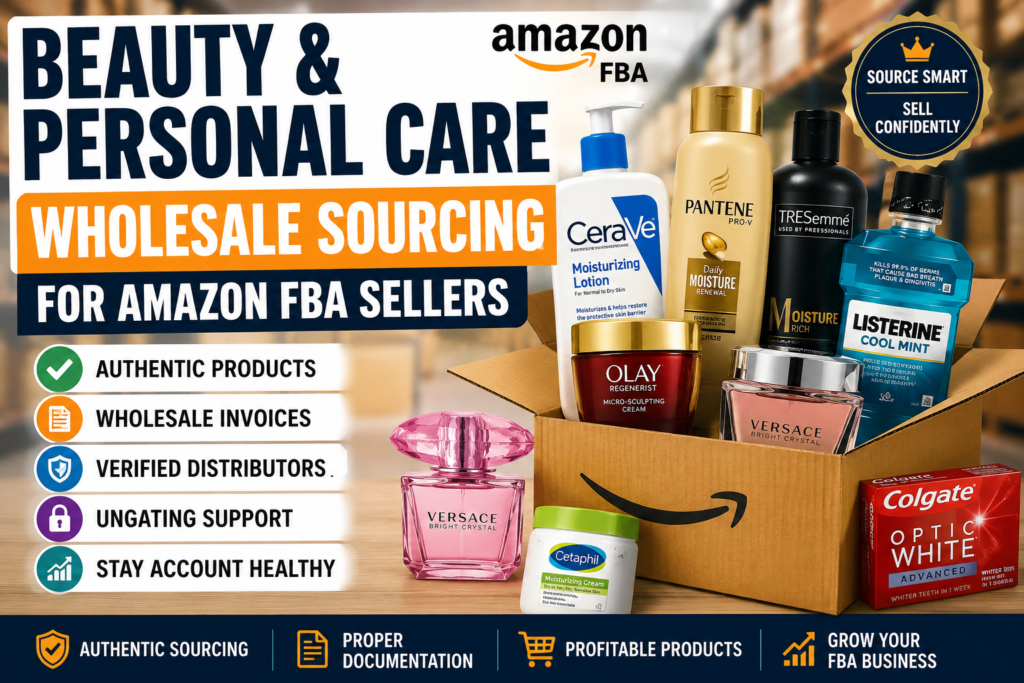
But this category also needs careful sourcing.
Many new Amazon sellers make the mistake of focusing only on price and profit. They find a product that looks good, buy inventory quickly, and later discover that the brand may be restricted, the invoice is not accepted, the product has expiry concerns, or the supplier cannot provide proper business documentation.
That is why beauty & personal care wholesale sourcing for Amazon FBA should be handled with a professional process. Sellers need authentic products, verified distributors, clean invoices, proper product details, and organized sourcing records. These things do not guarantee Amazon approval, but they may help support approval requests, account health reviews, and product authenticity checks depending on Amazon’s requirements.
If you read our previous guide on pet supplies wholesale sourcing for Amazon sellers, this article follows the same idea: Amazon sellers should treat sourcing as a long-term business system, not just a quick product hunt.
Quick Answer
Beauty & personal care wholesale sourcing for Amazon FBA means buying authentic skincare, haircare, grooming, hygiene, fragrance, and cosmetic products from verified wholesale distributors instead of random retail or unknown suppliers. For Amazon sellers, proper wholesale invoices, supplier verification, product authenticity, and organized records may help support Amazon approval requests or account health reviews, depending on the category, brand, marketplace, and seller account requirements.
What Beauty & Personal Care Wholesale Sourcing Means
Beauty and personal care wholesale sourcing is the process of purchasing beauty-related products in bulk from a business-to-business distributor or wholesale supplier. These products may include skincare items, haircare products, deodorants, shaving products, soaps, lotions, fragrances, cosmetics, and personal hygiene essentials.
For Amazon FBA sellers, the goal is not only to find products at a lower cost. The real goal is to source products that are:
- Authentic and sellable
- Properly packaged
- Clearly documented
- Sourced from a reliable distributor
- Supported with a professional wholesale invoice
- Suitable for Amazon’s category and brand requirements
A verified wholesale distributor is different from a random online seller or retail store. A retail receipt usually proves a consumer purchase, while a wholesale invoice shows a business-to-business transaction. This difference can matter when Amazon asks for documents related to product authenticity, category approval, or account health.
Sellers can explore available beauty and personal care products through the Beauty & Personal Care wholesale category and review supplier details before placing an order.
Why Beauty & Personal Care Sourcing Matters for Amazon FBA Sellers
Beauty and personal care products often go directly on the customer’s skin, hair, or body. Because of this, sellers should be extra careful about product condition, authenticity, expiry dates where applicable, packaging, labels, and brand restrictions.
For Amazon FBA sellers, poor sourcing can create serious problems. A product may look profitable, but if the supplier is unclear or the invoice is incomplete, the seller may struggle when Amazon asks for proof of authenticity.
A stronger sourcing process can help sellers:
- Keep better business records
- Reduce confusion during document requests
- Understand product and brand restrictions before buying
- Avoid unclear or risky supply chains
- Build repeat purchasing relationships
- Prepare cleaner documentation for Amazon review situations
This does not mean every invoice will lead to approval. Amazon’s requirements may vary by category, marketplace, brand, ASIN, and seller account history. Sellers should always review the latest request inside Seller Central before submitting documents.
In our previous blog on distributor vs retailer for Amazon FBA, we explained why wholesale distributors are usually better for long-term sourcing than retail stores. Beauty and personal care is a category where that difference becomes even more important.
Step-by-Step Practical Guide
1. Choose the Right Beauty Subcategory
Before buying inventory, decide which beauty or personal care area fits your Amazon account and business goals. Common subcategories may include:
- Skincare products
- Haircare products
- Shaving and grooming items
- Personal hygiene products
- Fragrances and body sprays
- Beauty tools and accessories
- Men’s grooming essentials
Beginners should avoid rushing into highly restricted or brand-sensitive products without checking eligibility first. Start with products you understand and can verify properly.
2. Check Amazon Eligibility Before Buying
One of the biggest mistakes Amazon sellers make is buying inventory first and checking restrictions later. Before placing a wholesale order, check whether your account can sell that product or brand.
Review:
- Category approval requirements
- Brand restrictions
- ASIN-level restrictions
- Condition requirements
- Expiry or shelf-life rules
- Hazmat or safety concerns
- Packaging and labeling requirements
A product may be listed on Amazon, but that does not automatically mean every seller can sell it. Always check your own account eligibility.
3. Work With a Verified Wholesale Distributor
A verified distributor can help sellers source products with clearer business records. This may include proper invoices, supplier contact details, product information, and communication support.
When reviewing a distributor, check for:
- Business website
- Clear product categories
- Contact information
- Wholesale account process
- Professional communication
- Invoice availability
- Product authenticity focus
You can learn more about the company’s wholesale focus on the About Us page.
4. Ask About Wholesale Invoices
A proper wholesale invoice can help sellers keep organized sourcing records. It may also help support Amazon approval or authenticity requests, depending on Amazon’s current requirements.
A good wholesale invoice should normally include:
- Distributor business name
- Distributor contact details
- Buyer business name
- Invoice number
- Invoice date
- Product names or descriptions
- Quantities purchased
- Order details
- Clear transaction record
Do not assume a receipt, screenshot, order confirmation, or edited document will work as an invoice. Sellers should request a proper business invoice from the supplier and keep it safely stored.
5. Verify Product Authenticity and Condition
Beauty and personal care products should be checked carefully before selling. Sellers should avoid products that appear damaged, expired, repackaged, leaking, opened, or unclear in origin.
Before buying, ask practical questions:
- Are the products new and authentic?
- Are they sealed and sellable?
- Are expiry dates available where relevant?
- Is the packaging clean and retail-ready?
- Can the distributor provide a proper invoice?
- Is the supplier reachable if documentation is needed?
Authenticity is not just about avoiding counterfeit products. It is also about making sure the product comes from a clear and professional supply chain.
6. Keep Records Organized
Amazon sellers should keep sourcing records in one place. This includes invoices, supplier emails, product lists, order confirmations, tracking details, and any brand authorization documents where available.
Organized records can help sellers respond faster if Amazon asks for documents. It can also help sellers track which products came from which distributor.
A simple folder system can include:
- Supplier documents
- Invoices by month
- Product research files
- Amazon approval submissions
- Brand authorization records where available
- Expiry or batch information where relevant
Good recordkeeping does not guarantee approval, but it can help sellers run a cleaner and more professional Amazon business.
7. Start With a Controlled Order
New sellers should avoid placing large orders before testing the process. Start with a manageable order, confirm invoice quality, check product condition, and make sure the product fits your Amazon selling plan.
This helps reduce risk and gives you time to understand the distributor’s process before scaling.
Sellers ready to begin can apply for a wholesale account and review available product options before ordering.
Common Mistakes to Avoid
Beauty and personal care sourcing can become risky when sellers move too fast. Avoid these common mistakes:
- Buying from unknown suppliers without verification
- Using retail receipts instead of wholesale invoices
- Ignoring brand or category restrictions
- Buying restricted products without checking eligibility
- Assuming invoices guarantee Amazon approval
- Selling products with damaged or unclear packaging
- Ignoring expiry dates where applicable
- Not saving supplier communication
- Choosing products only because the price looks low
- Submitting incomplete or altered documents to Amazon
A low-cost product is not always a good deal. If the supplier cannot provide clear documentation or the product source is unclear, the inventory may create more problems than profit.
How a Verified Wholesale Distributor Can Help
A verified wholesale distributor can support Amazon sellers by providing a more reliable sourcing process. This is especially useful in beauty and personal care, where authenticity, product condition, and documentation matter.
A distributor may help sellers with:
- Access to authentic wholesale products
- Business-to-business purchase records
- Proper wholesale invoices
- Category-based product options
- Supplier communication
- Better sourcing documentation
- Brand authorization support where available
- Product authenticity support
No distributor should promise guaranteed Amazon ungating or guaranteed approval. Amazon makes its own decisions based on its review process, category rules, marketplace requirements, and seller account status.
However, working with a verified distributor can help sellers keep better sourcing records and prepare more professionally when Amazon requests documents.
If you have questions about available beauty products, invoices, or wholesale account setup, you can contact the distributor before placing an order.
Final Thoughts
Beauty & personal care wholesale sourcing for Amazon FBA can be a strong opportunity for sellers who want to build a more professional wholesale business. But it should not be treated as a shortcut. Sellers need to check restrictions, verify suppliers, request proper invoices, review product condition, and keep clean records.
The best approach is simple: buy from verified distributors, avoid unclear suppliers, check Amazon eligibility before ordering, and keep documentation organized from day one.
If you are ready to source authentic beauty and personal care products, you can apply for a wholesale account, explore the Beauty & Personal Care category, or contact Nations Distributor for product and account questions.
FAQs
1. What is beauty & personal care wholesale sourcing for Amazon FBA?
Beauty & personal care wholesale sourcing means buying products like skincare, haircare, grooming, hygiene, fragrance, and cosmetics in bulk from a wholesale distributor for resale on Amazon. Sellers should focus on authentic products, proper invoices, and supplier verification.
2. Can wholesale invoices help with Amazon ungating?
Wholesale invoices may help support Amazon ungating or approval requests, depending on Amazon’s category, brand, marketplace, and seller account requirements. However, invoices do not guarantee approval because Amazon makes the final decision.
3. What should a beauty wholesale invoice include?
A beauty wholesale invoice should normally include supplier details, buyer details, invoice date, invoice number, product names or descriptions, quantities purchased, and clear transaction information. Amazon’s document requirements may vary, so sellers should review each request carefully.
4. Are beauty and personal care products restricted on Amazon?
Some beauty and personal care products, brands, or ASINs may require approval before selling. Requirements may vary by product type, brand, marketplace, and seller account. Sellers should check eligibility in Seller Central before buying inventory.
5. Why should Amazon sellers use verified distributors?
Verified distributors can help sellers source authentic products, receive proper wholesale invoices, maintain better purchase records, and reduce confusion during Amazon documentation requests. This can support a more professional sourcing process.