
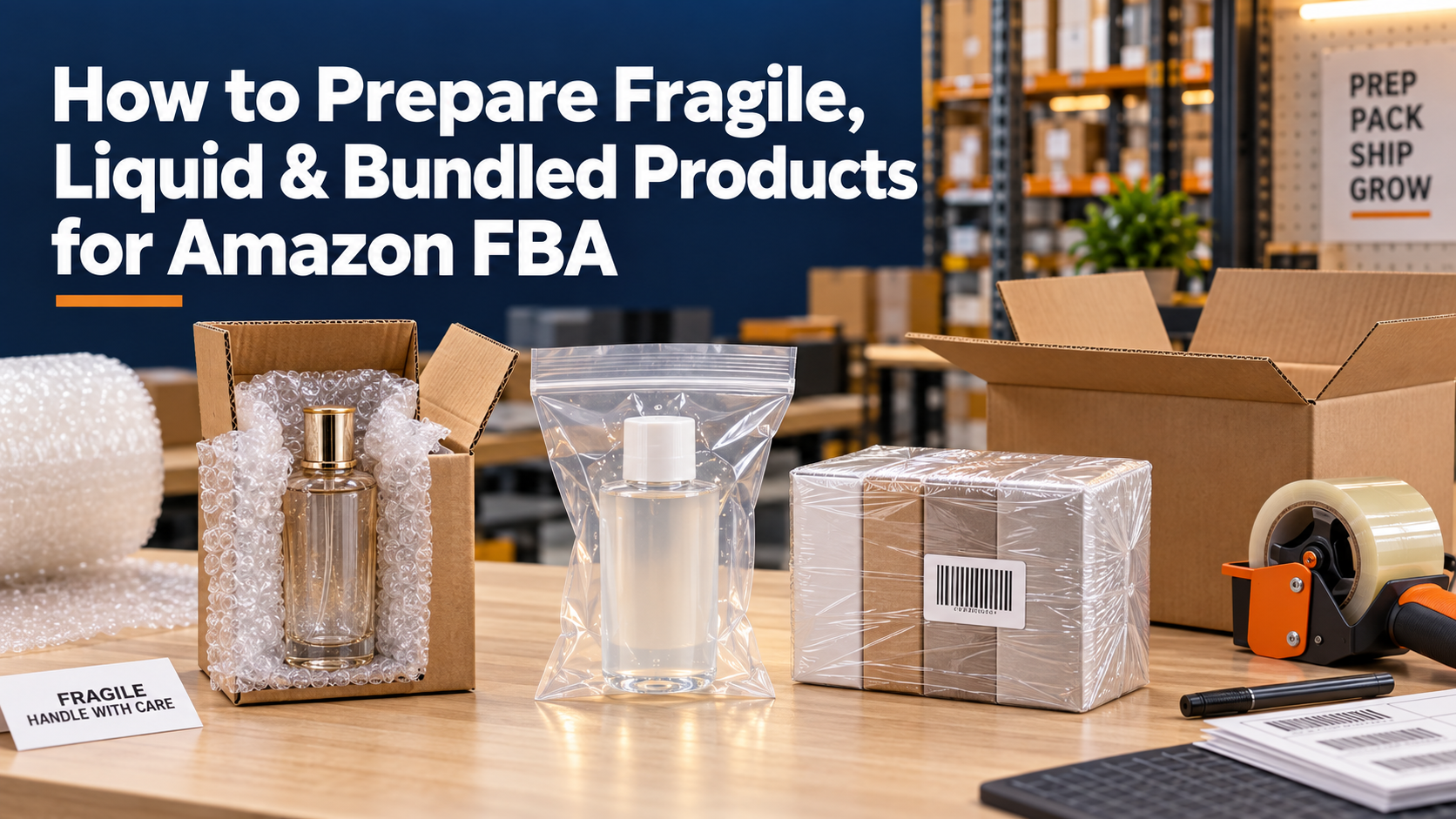
Selling through Amazon FBA can simplify fulfilment, but it does not remove the need for careful product preparation. Fragile items can break in transit, liquids can leak, and bundles can be separated or received incorrectly when they are not packed and labelled properly. Each issue can lead to customer complaints, removal orders, extra prep costs, or inventory that cannot be received as expected.
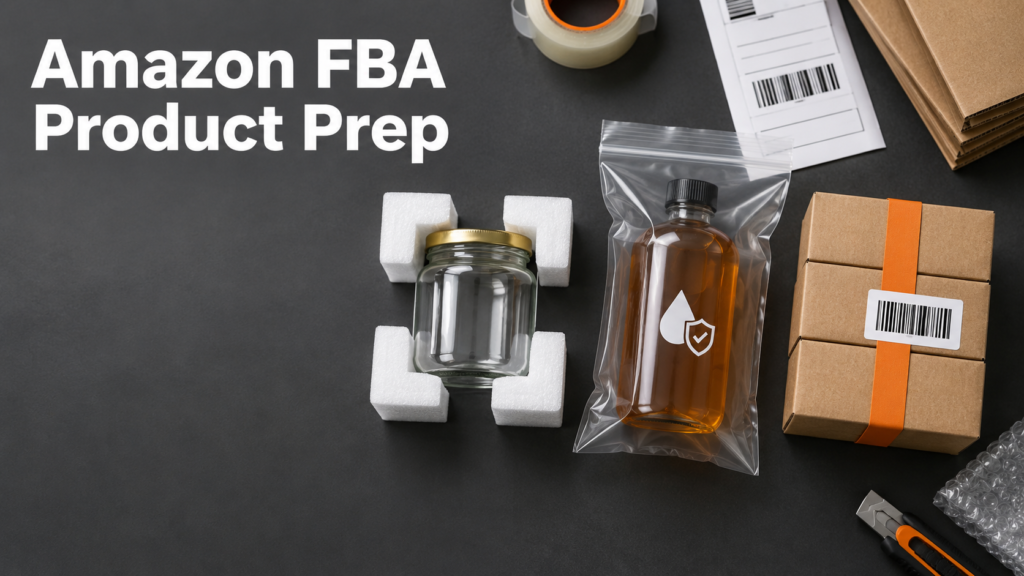
For wholesale sellers, preparation begins before cartons reach the prep centre or fulfilment centre. You need the right products, clear invoices, accurate unit counts, and packaging that protects each sellable unit. This guide explains a practical way to prepare fragile, liquid, and bundled inventory for Amazon FBA while keeping your process organised.
Quick Answer: To prepare fragile, liquid, and bundled products for Amazon FBA, first confirm the current requirements for the product category and marketplace. Protect fragile items with suitable cushioning and durable outer packaging; secure liquid closures and use leak-resistant packaging; and package bundles as one clearly labelled, sellable unit. Apply the correct barcode and shipment labels, inspect units before shipping, and keep supplier invoices and product records for your sourcing files.
What Amazon FBA Product Preparation Means
Amazon FBA preparation is the work done before inventory is sent to a fulfilment centre. It can include inspecting products, applying barcodes, bagging or boxing items, adding warning labels, building bundles, and packing cartons for shipment. The exact requirements may vary by category, condition, marketplace, product size, and Amazon’s current policies.
The most useful mindset is simple: prepare every unit so it can travel, be received, stored, and shipped to a customer without damage, leakage, confusion, or loss of identity. Do not assume that a manufacturer carton alone is enough. Review the condition of the individual sellable unit and the protection around it.
This builds on our guide to case packs versus individual units. Case quantity matters, but so does the condition and preparation of every unit inside that case.
Why This Matters for Amazon FBA Sellers
Good FBA prep protects both the product and your seller operation. A cracked bottle, broken glass item, or incomplete bundle may create more than one lost sale. It can also create returns, negative feedback, disposal costs, and time-consuming inventory reconciliation.
For wholesale sellers, it is especially important because inventory often arrives in larger quantities. A small packing mistake repeated across a case can affect many units. Correct preparation helps you:
- Reduce avoidable damage and leakage during handling.
- Make units easier for receiving teams to identify.
- Prevent bundled items from being separated.
- Keep listings aligned with the item the customer receives.
- Maintain cleaner inventory, invoice, and sourcing records.
- Address issues with suppliers or prep partners before the shipment leaves.
It also supports a more professional relationship with suppliers. When you understand pack sizes, labelling, and preparation needs, you can communicate clearer purchase requirements. Read our article on building a long-term relationship with a wholesale distributor for practical guidance on creating that kind of working relationship.
Step-by-Step: Prepare Products Before Sending Them to FBA
Step 1: Check the listing, product category, and current FBA requirements
Before opening cartons, verify that the product matches the listing you intend to send. Confirm the ASIN, brand, variation, condition, unit quantity, and whether the item has any category-specific preparation needs. Requirements may vary by category and marketplace, so check Seller Central before every new SKU or shipment.
Ask these questions:
- Is this the exact product, size, colour, scent, or variation listed?
- Is the unit eligible for FBA in its current condition?
- Does Amazon require a specific barcode, safety label, or packaging method?
- Does the item contain glass, liquid, sharp components, batteries, or loose pieces?
- Is it being sold individually or as a multi-unit bundle?
What is the first step in FBA product prep?
The first step is confirming that each physical unit matches the Amazon listing and reviewing the current FBA requirements for that product category and marketplace.
Step 2: Inspect each sellable unit
Inspect inventory before you label or ship it. Check for crushed retail boxes, broken seals, leakage, missing accessories, incorrect variations, expired or damaged packaging, and mismatched UPCs. If you work with a prep centre, give them a written inspection checklist and ask for photos when a problem is found.
Keep a simple record of received quantity, accepted quantity, rejected quantity, SKU, supplier, and issue type. This makes claims or replacements easier to discuss with the supplier and gives you better control over your inventory.
Step 3: Prepare fragile products for safe handling
Fragile products include glass containers, ceramics, delicate electronics, framed items, and products with breakable parts. The goal is to stop movement and protect vulnerable areas without making the item impossible to identify or scan.
For fragile units:
- Use clean, protective cushioning around breakable surfaces.
- Put the item in a durable box when the retail packaging is not strong enough.
- Fill empty space so the item does not shift inside the outer packaging.
- Protect sharp corners, glass panels, lids, and protruding components.
- Seal the packaging securely and add any required handling labels.
- Recheck that the barcode remains visible and scannable.
Avoid relying on loose paper, weak tape, or damaged manufacturer cartons. If the product can move inside its packaging, it may arrive damaged even if the outer shipping carton looks fine.
How should fragile products be prepared for Amazon FBA?
Fragile products should be cushioned, immobilised inside durable packaging, securely sealed, and labelled as required. The barcode must remain visible and each unit should be inspected for damage before shipment.
Step 4: Prepare liquid products to prevent leaks
Liquid products require extra attention because a single leak can damage other inventory in the same carton. Examples include cosmetics, supplements, cleaning products, oils, sauces, and personal-care items.
Start by checking the closure. Make sure caps, pumps, lids, droppers, and seals are intact. Where appropriate and permitted, place a protective seal over the opening or secure the closure so it cannot easily open during transit. Place the individual unit in suitable leak-resistant packaging and make sure the product label remains readable.
Then inspect the full unit for cracks, swollen containers, residue, or signs of prior leakage. Do not send questionable units simply because the leak appears minor. It may worsen during temperature changes, handling, or transport.
When packing cartons, keep liquids upright where practical, avoid excessive weight on top of them, and use dividers or cushioning if the container design needs it. Always confirm current Amazon rules for the type of liquid and its category.
Do liquid products need special FBA packaging?
Liquid products often need secure closures and leak-resistant protection so spilled contents cannot damage other inventory. Sellers should check the current Amazon requirements for the relevant category before shipping.
Step 5: Build and label bundles as one sellable unit
A bundle should arrive at Amazon and at the customer’s door as one complete product. If two or more items are sold together under one listing, secure them so they cannot be separated during receiving or fulfilment.
Use a suitable bag, shrink wrap, box, or other durable packaging method appropriate for the products. Apply the correct barcode for the bundle, not separate sellable-unit barcodes that could confuse receiving. Include a clear label such as “Sold as Set” or “Do Not Separate” when appropriate, and make sure every component is included.
Be precise with bundle contents. If your listing says a bundle includes three items, the physical package must contain those three exact items. Do not substitute scents, colours, or product sizes without updating the listing correctly.
How do you label an Amazon FBA bundle?
Package all components together as one unit, apply the barcode assigned to the bundle listing, and add a clear “Sold as Set” or similar label when appropriate so the components are not separated.
Step 6: Apply barcodes and shipment labels carefully
Whether you use manufacturer barcodes or Amazon labels depends on your listing setup and Amazon’s requirements. Place labels on a flat, visible surface where they can be scanned easily. Cover or remove conflicting scannable codes when required so the wrong barcode is not scanned.
After labelling, scan-test a sample of each SKU. Match it against your shipment plan and carton contents. For bundles, check that the label resolves to the bundle listing—not to one of the items inside it.
Step 7: Pack cartons and keep source documentation
Once individual units are ready, pack shipping cartons with accurate quantities and sensible weight distribution. Do not mix products carelessly just to fill a carton. Use enough dunnage to prevent movement, but avoid overpacking so tightly that retail packaging gets crushed.
Keep purchase invoices, supplier details, packing lists, product photos, and shipment records together. Authentic wholesale sourcing documents can help sellers keep better sourcing records and may help support approval requests depending on Amazon’s requirements. They are not a substitute for Amazon’s own review process.
Common Mistakes to Avoid
The following mistakes are easy to avoid but costly when repeated at scale:
- Sending dented, leaking, opened, or incomplete units.
- Treating a fragile retail box as if it were protective shipping packaging.
- Leaving liquid caps or pumps unsecured.
- Using the barcode of one component on a bundle.
- Failing to add a clear bundle warning where needed.
- Allowing multiple SKUs to move freely in the same carton.
- Skipping a final quantity and label check.
- Buying from unclear sources and failing to retain invoices.
Do not prepare inventory based only on what worked for a previous shipment. Amazon policies and product-specific requirements can change, so make verification part of every shipment workflow.
How a Verified Wholesale Distributor Can Help
A reliable distributor does more than supply products. Clear product information, consistent case-pack details, authentic invoices, and responsive communication can make FBA preparation easier. For example, accurate data helps you decide whether you need individual labels, bundle components, additional protective packaging, or a prep centre inspection.
At Nations Distributor, sellers can explore wholesale opportunities with a distributor-focused approach to products and sourcing documentation. Before placing an order, review the available product categories, ask about case packs and packaging, and confirm the details that matter for your FBA plan.
If you are establishing a wholesale relationship, learn more about Nations Distributor and communicate your intended sales channel, product requirements, and documentation needs early. This can reduce last-minute prep issues and help you make more informed purchasing decisions.
Final Thoughts
Preparing fragile, liquid, and bundled products for Amazon FBA is not just a packing task. It is a quality-control process that starts with correct sourcing, continues with careful inspection and labelling, and ends with accurate shipment records. When you protect each sellable unit and verify its identity before sending it, you give your inventory a better chance of being received and fulfilled as intended.
Ready to source products with clearer wholesale records and practical communication? Apply for a wholesale account to explore available options, or contact Nations Distributor to discuss product categories, case packs, and sourcing questions.
FAQs
1. What is the best way to prepare fragile items for Amazon FBA?
Inspect each item, add suitable cushioning, prevent movement inside durable packaging, seal it securely, and keep the barcode visible. Check Seller Central for any current product-specific preparation or labelling requirements.
2. Can I send liquids to Amazon FBA?
Many liquid products can be sent to FBA, but packaging and eligibility requirements may apply. Secure closures, use leak-resistant protection, inspect for leaks, and confirm the current rules for your category and marketplace.
3. Do Amazon FBA bundles need a separate barcode?
Yes, a bundle should normally be prepared and labelled as one sellable unit using the barcode assigned to the bundle listing. Its individual components should not be received as separate units.
4. What documents should wholesale Amazon sellers keep?
Keep supplier invoices, purchase orders, packing lists, product and packaging photos, shipment records, and supplier contact details. These documents can help sellers keep better sourcing records and may help support approval requests depending on Amazon’s requirements.
5. Should I use a prep centre for fragile or liquid FBA products?
A prep centre can be useful if you need consistent inspection, labelling, protective packaging, or bundle assembly at scale. Choose one that provides clear instructions, inventory reporting, and issue photos, and still review Amazon’s current requirements yourself.