
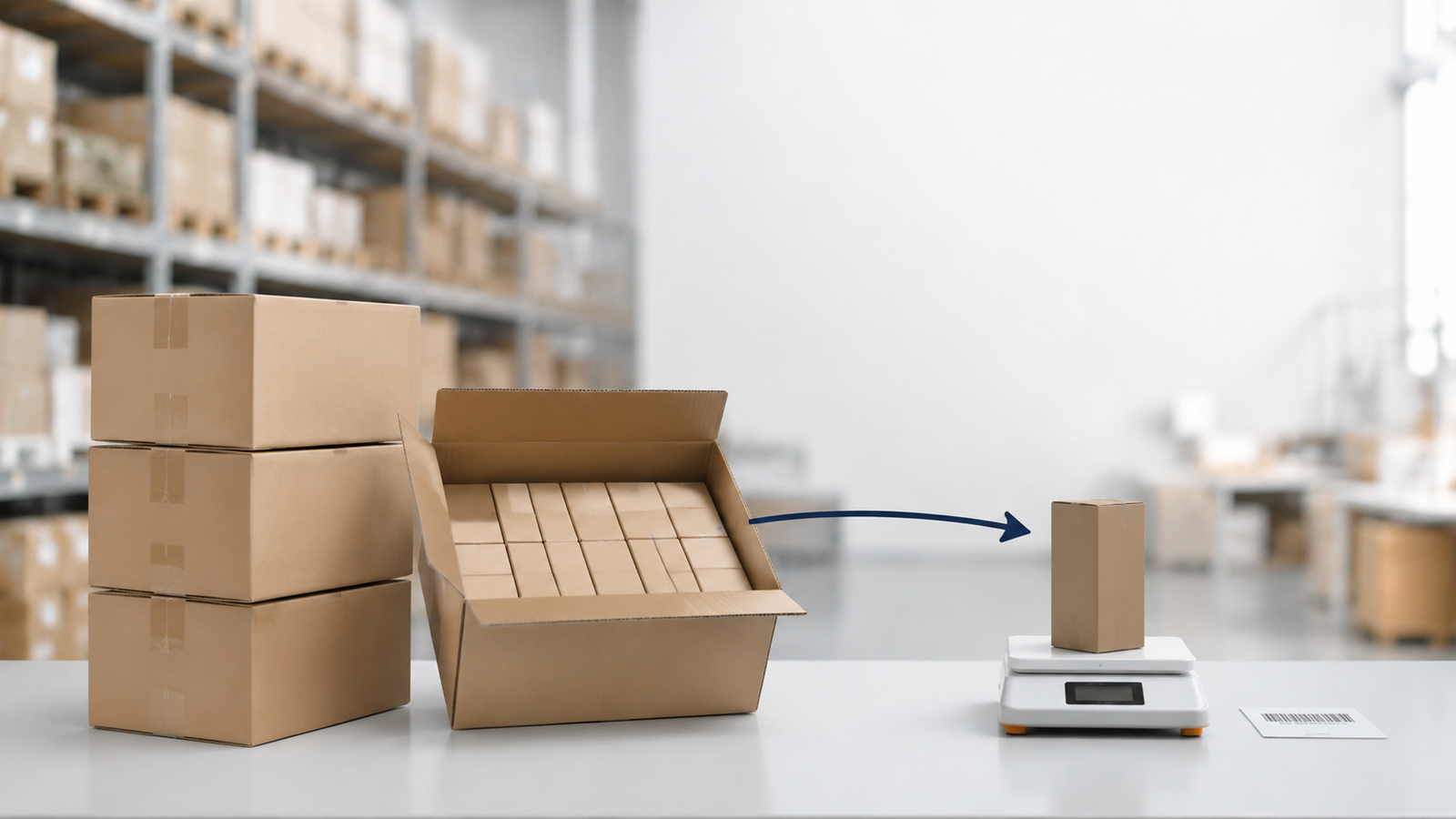
When you buy from a wholesale distributor, products are usually shipped in case packs rather than as loose single items. That affects how much inventory you need to purchase, how you prepare products for Amazon, and how you plan replenishment.

This guide explains the difference between case packs and individual units, how wholesale inventory is commonly shipped, and what Amazon sellers should check before placing an order.
Quick Answer
A case pack is a carton containing multiple identical sellable units, such as 12 bottles of the same shampoo. An individual unit is one product that can be sold to a customer.
Wholesale distributors commonly ship products in case packs to improve handling, protection, and order efficiency. Amazon FBA sellers may need to open those cases, label each individual unit, and ship the products to Amazon according to the fulfillment plan. Always confirm the case quantity, unit cost, expiration requirements, and Amazon prep needs before ordering.
Understanding Case Packs, Individual Units, and Master Cartons
A case pack is a standard quantity of the same item packed together by the manufacturer or distributor. For example:
- One case may contain 6 units.
- One case may contain 12 units.
- One case may contain 24 units.
- Some larger products may have only 2 or 4 units per case.
If a distributor lists a product at $8 per unit with a case pack of 12, you are generally purchasing 12 units at a time. Your total product cost would be $96 before shipping, taxes, prep, or other fees.
An individual unit is the single product a customer receives when they place an order on Amazon. It could be one bottle, one tool, one accessory, or one packaged item.
What Is a Master Carton?
A master carton is a larger outer box that may hold multiple inner cases. For example, one master carton could contain four cases of 12 units, for a total of 48 sellable units.
This matters because wholesalers may ship inventory in master cartons for safer transport and easier warehouse handling. However, Amazon FBA may require you to send inventory in a specific way based on the shipment workflow generated in Seller Central.
What Is an Inner Pack?
An inner pack is a smaller group of products inside a larger case. For example, a 24-unit case may contain two inner packs of 12 units each. This can make warehouse handling easier, but it does not automatically mean Amazon will accept the inner pack as one sellable item.
For Amazon FBA, the key question is usually: “Is each unit individually sellable and properly labeled?” If the answer is yes, each individual product is typically counted as one unit of inventory.
Why Case Packs Matter for Amazon FBA Sellers
Case packs influence more than the number of products you receive. They affect your cash flow, inventory planning, shipping costs, storage exposure, and ability to test a product safely.
1. They Determine Your Minimum Purchase Quantity
Many distributors set a minimum order quantity by case. You may not be able to buy three individual units if the product is only sold in a case of 12.
For beginner Amazon sellers, this is important. A product with a low price per unit can still require a larger upfront investment if the case quantity is high.
Before placing an order, calculate:
- Number of units per case
- Number of cases required
- Total product cost
- Freight or delivery cost
- Amazon prep and labeling costs
- Estimated Amazon fees
- Expected selling price
- Storage and replenishment risk
This helps you avoid buying more inventory than your budget or sales history can support.
2. They Affect Your Inventory Forecasting
Amazon FBA sellers should forecast inventory in units, not only cases. Amazon tracks the number of sellable units available, while your supplier may sell by case quantity.
For example, if one case contains 12 units and you expect to sell 36 units per month, you would need approximately three cases for one month of stock. If you want a small buffer for demand changes, you may order four cases instead.
This connects closely with our guide on finding the right inventory balance between overstock and understock. The goal is not simply to purchase more inventory. It is to hold a practical amount that supports sales without creating unnecessary storage pressure.
3. They Influence FBA Shipping and Prep
A sealed case from a distributor is not always ready to ship directly to Amazon. Depending on the product and your fulfillment plan, you may need to:
- Open the case
- Inspect each unit
- Apply Amazon FNSKU labels
- Check for damaged packaging
- Confirm expiration dates where applicable
- Add poly bags, bubble wrap, or warning labels if required
- Repack units into Amazon-compliant shipping cartons
Amazon’s requirements may vary by category, marketplace, item condition, and product type. Always review the shipment workflow in Seller Central before sending inventory.
For a broader look at this process, read our Amazon FBA shipping and preparation guide for wholesale inventory.
Case Packs vs Individual Units: A Practical Comparison
| Factor | Case Packs | Individual Units |
|---|---|---|
| Purchase method | Bought in fixed quantities | Bought one at a time |
| Common wholesale use | Very common | Less common |
| Cost per unit | Often more competitive | May be higher |
| Upfront investment | Usually higher | Usually lower |
| Inventory control | Requires careful planning | Easier to test in small quantities |
| FBA preparation | May require case opening and unit labeling | Each unit is handled separately |
| Best for | Consistent sellers and planned replenishment | Samples, testing, or special arrangements |
For most wholesale Amazon businesses, case packs are normal. The real skill is learning how to evaluate the case quantity before committing your capital.
Step-by-Step: How to Handle Wholesale Case Packs for Amazon FBA
Step 1: Confirm the Exact Case Quantity
Never assume that “one case” means 12 units. Case sizes vary by brand and product. Ask the distributor for:
- Units per case
- Number of cases available
- Master carton dimensions and weight
- Product UPC or GTIN
- Expiration date information, if relevant
- Whether the product is factory sealed
- Whether products are sold as individual units or multipacks
A simple confirmation before ordering can prevent expensive mistakes.
Step 2: Check Whether Each Unit Is Amazon-Ready
Each unit should normally have a scannable barcode and packaging that is suitable for the end customer. You should also confirm whether the listing requires an Amazon FNSKU label over the manufacturer barcode.
If a case contains 12 individual products, do not assume the outer carton barcode is enough. In many situations, Amazon needs each sellable unit to be identifiable.
Step 3: Confirm Whether You Are Selling Singles or Bundles
This is one of the most common areas of confusion.
Suppose you receive a case of 12 identical bottles. You may sell:
- Each bottle as one individual unit, or
- A bundle of two bottles, if the listing and Amazon policies allow it.
If you create a bundle, it must be packaged and labeled correctly as one sellable product. You should not send a loose two-pack unless the product setup, labeling, and preparation are correct.
Step 4: Calculate Profitability at the Unit Level
Do not calculate profit only by case cost. Break it down per unit.
For example:
- Case cost: $120
- Units per case: 12
- Product cost per unit: $10
- Estimated prep cost per unit: $0.50
- Estimated inbound shipping per unit: $0.60
- Total landed cost per unit: $11.10
Then compare the landed cost with the expected selling price and Amazon fees. This gives you a more realistic view of profitability.
Step 5: Create Your Amazon Shipment Plan Before Repacking
Create or review the shipment in Seller Central before sending inventory to a prep center or Amazon warehouse. Amazon may assign one or more receiving locations, depending on your account settings and current logistics requirements.
This allows you to prepare the correct number of units, carton labels, and shipping cartons.
Step 6: Keep Clear Purchase and Product Records
Organized sourcing records are valuable for account health and compliance. Save:
- Wholesale invoices
- Supplier contact information
- Product lists and SKU details
- Payment records
- Shipping documents
- Brand authorization documents, where available
- Product photos and labels
Authentic wholesale invoices and clear supplier details may help support approval requests, depending on Amazon’s requirements. Requirements may vary by category and marketplace, so sellers should always review the latest policies before submitting documentation.
Common Mistakes to Avoid
Ignoring the Case Quantity
A seller may see a product with a good profit estimate and place an order without realizing that the supplier requires six cases of 24 units. That can turn a small test order into 144 units of inventory.
Always multiply the unit cost by the full required quantity.
Confusing a Case With a Multipack Listing
A distributor’s case of 12 is usually a shipping quantity, not automatically a 12-pack consumer product. Do not list the full case as one customer-facing multipack unless the listing, packaging, and product setup are correct.
Sending Damaged or Mixed Inventory
Wholesale cases can arrive with crushed corners, damaged labels, or mixed lots. Inspect inventory before shipping it to Amazon. A few minutes of checking can reduce avoidable returns and receiving issues.
Overlooking Expiration or Date Requirements
Products in categories such as grocery, beauty, health, or consumables may have date-related requirements. Confirm that the remaining shelf life is acceptable before purchasing and shipping inventory.
Ordering Too Much Too Early
A large case quantity can look attractive because the unit cost is lower. But lower cost does not always mean lower risk. If the product does not sell as expected, storage fees and tied-up capital can hurt cash flow.
Start with quantities you can reasonably manage, based on demand research, supplier terms, and your available budget.
How a Verified Wholesale Distributor Can Help
A reliable distributor does more than sell products. They can help sellers make better sourcing decisions by providing clear product details, consistent invoices, and accurate case-pack information.
When evaluating a supplier, look for:
- Clear business identity and contact details
- Transparent wholesale terms
- Proper invoices with supplier information
- Product catalogues with case quantities
- Legitimate sourcing and brand documentation where available
- Responsive support for product and shipping questions
At Nations Distributor, sellers can explore wholesale sourcing options and work with a distributor that understands the importance of organized inventory and documentation.
If you are building a wholesale sourcing process, learn more about the company on the About Us page. When you are ready to source products, you can apply for a wholesale account to discuss available categories and account requirements.
Final Thoughts
Case packs are a normal part of wholesale inventory, but they require smart planning. The main difference is simple: a case pack is how products are commonly purchased and shipped, while an individual unit is what you usually sell to the Amazon customer.
Before you order, confirm the exact pack quantity, calculate your landed cost per unit, review Amazon’s preparation requirements, and avoid confusing a shipping case with a customer-facing multipack. These steps can help sellers keep better sourcing records, protect cash flow, and make more informed replenishment decisions.
Ready to source authentic wholesale inventory for your Amazon business? Apply for a wholesale account or contact Nations Distributor to ask about product categories, case quantities, and wholesale ordering options.
FAQs
What is a case pack in wholesale inventory?
A case pack is a fixed number of identical products packed together in one carton. For example, one case may include 12 individual units of the same item.
Can I send a sealed wholesale case directly to Amazon FBA?
Sometimes, but not always. You must first check Amazon’s shipment plan, labeling instructions, and preparation requirements. Each sellable unit may need its own barcode or FNSKU label.
Is a case pack the same as a multipack on Amazon?
No. A case pack is usually the quantity used for wholesale shipping. A multipack is a customer-facing product offering, such as a two-pack or six-pack. They should not be treated as the same thing.
How do I calculate the cost per unit from a case pack?
Divide the full case cost by the number of units in the case. Then add estimated prep, inbound shipping, and other relevant costs to calculate your landed cost per unit.
Why are wholesale invoices important for Amazon sellers?
Wholesale invoices can help sellers keep better sourcing records and may help support approval requests, depending on Amazon’s requirements. Requirements may vary by category and marketplace