
Starting an Amazon FBA wholesale business can seem simple: find a product, buy it in bulk, send it to Amazon, and start selling. In reality, inventory sourcing is where many beginners create expensive problems.
A product may look profitable but be restricted for your account. A supplier may offer attractive pricing but issue an incomplete invoice. The inventory may be authentic, yet the seller may not have enough documentation to explain the supply chain if Amazon asks questions.
The safer approach is to evaluate the product, supplier, documentation, and listing eligibility before placing an order. Here are the Amazon FBA inventory sourcing mistakes new sellers should avoid.
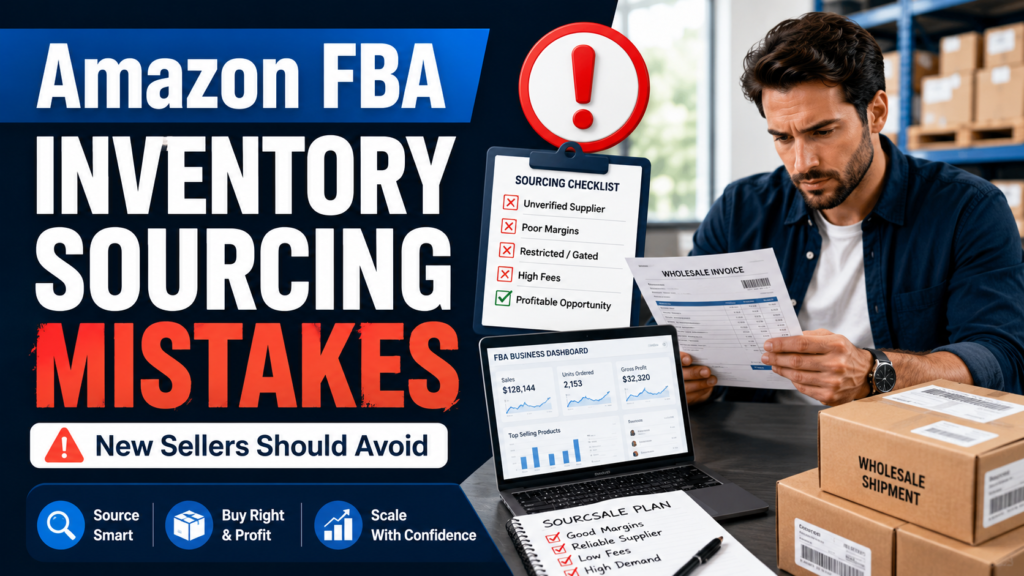
The most common Amazon FBA inventory sourcing mistakes are buying before checking listing eligibility, choosing suppliers only by price, accepting weak invoices, ignoring authenticity records, ordering too much inventory, and failing to calculate the full landed cost.
Before purchasing, verify the distributor, check the exact ASIN in Seller Central, review the invoice format, estimate all costs, test with a controlled quantity, and save every sourcing record.
What Is Amazon FBA Inventory Sourcing?
Amazon FBA inventory sourcing is the process of finding, evaluating, purchasing, and documenting products for sale through Fulfillment by Amazon. Wholesale sellers typically buy branded products in business quantities from manufacturers, authorized suppliers, or wholesale distributors.
Good sourcing is not just finding the lowest unit price. A product should pass several checks:
- Your account can list it.
- The supplier is a legitimate, verifiable business.
- The products are authentic and traceable.
- The supplier provides a proper wholesale invoice.
- Demand and competition support the purchase.
- The item remains profitable after all costs.
- Replenishment is reasonably practical.
If one of these points is unclear, investigate before paying.
Why This Matters for Amazon FBA Sellers
A poor sourcing decision can leave a seller with restricted, slow-moving, or unprofitable inventory. It may also create difficulties if Amazon requests supplier information, invoices, authenticity records, or compliance documents.
Requirements may vary by product, brand, category, marketplace, and seller account. That is why sourcing should be treated as a risk-management process, not simply a buying activity.
If you read our previous guide on how wholesale invoices may support Amazon ungating requests, this article continues that discussion by focusing on the mistakes sellers should prevent before and after ordering.
Step-by-Step Practical Guide to Safer Inventory Sourcing
Step 1: Check Listing Eligibility
Search the exact ASIN in Seller Central and confirm whether your account can sell it. Do not assume another seller’s eligibility applies to you.
Some products may require approval, invoices, compliance documents, or other information. Checking before purchase can help prevent inventory from sitting unsold while you work through a restriction.
Step 2: Verify the Supplier
Review the supplier’s business name, address, website, contact details, product categories, and wholesale application process. The information should be clear and consistent.
A legitimate supplier should be able to explain what it sells, how wholesale accounts work, and what documentation buyers receive. Sellers can review the Nations Distributor About Us page as an example of the company information worth checking.
Step 3: Review the Invoice Format
Ask what will appear on the invoice before ordering. A typical wholesale invoice may include:
- Supplier and buyer business details
- Invoice number and date
- Product descriptions or identifiers
- Quantities purchased
- Contact and order information
Make sure your buyer name and address match your business records. Our Amazon FBA wholesale guide explains how invoices and supplier records fit into the wider wholesale process.
Step 4: Confirm Product Authenticity and Condition
Verify that products are authentic, correctly packaged, and sourced through a traceable business channel. Check the exact size, variation, pack count, condition, expiration date, labeling, and preparation requirements.
Depending on the product and Amazon’s request, sellers may need invoices, supplier information, authorization documents, or other sourcing records. Read our guide to brand authorization for Amazon FBA for more detail.
Step 5: Calculate the Full Landed Cost
Do not rely on the wholesale price alone. Include Amazon fees, distributor shipping, labeling, preparation, inbound placement costs, storage, returns, damage, and possible removal expenses.
Use conservative assumptions. A product with an attractive gross margin can become weak after fees, price changes, or slower sales.
Step 6: Test, Inspect, and Document
Start with a controlled order rather than committing too much capital to an untested product. When the shipment arrives, inspect the units before sending them to FBA.
Save invoices, payment records, order confirmations, product sheets, supplier emails, authorization documents, and shipment information. Organize records by supplier and invoice date so they can be found quickly.
Common Amazon FBA Inventory Sourcing Mistakes to Avoid
1. Buying From an Unverified Source
A professional-looking website does not prove that a supplier is reliable. Check business details, contact channels, policies, invoice practices, and the nature of the wholesale operation.
Be cautious when a supplier avoids basic questions or offers branded products with no clear sourcing trail.
2. Choosing Products Only by Estimated Margin
A high margin can hide weak demand, unstable pricing, heavy competition, high return rates, or slow turnover.
Review price history, offer count, expected sales velocity, fees, competition, and replenishment. Profit per unit matters, but so do risk and time to sell.
3. Ordering Before Checking Restrictions
This is one of the easiest mistakes to prevent. Check the exact ASIN before paying. Do not rely on a general statement that a product “can be sold on Amazon,” because listing access can differ between accounts.
4. Accepting Incomplete or Altered Invoices
Invoices should be readable, accurate, and issued by the supplier. Do not edit invoice details yourself or submit documents that do not represent the real transaction.
Wholesale invoices may help support approval or authenticity requests depending on Amazon’s requirements, but they do not guarantee approval.
5. Ignoring Packaging, Expiration, or Variation Details
Authentic products can still create complaints when packaging is damaged, seals are broken, expiration dates are too close, or the units do not match the listing.
Inspect every shipment and confirm that the product matches the exact listing variation, quantity, and condition.
6. Confusing Retail Receipts With Wholesale Invoices
Retail receipts and business invoices are not the same. Depending on the request, a retail receipt may not contain the supplier, buyer, product, and quantity details Amazon expects.
For a wholesale model, work with suppliers that provide proper business-to-business records.
7. Buying Too Much Too Soon
Large opening orders can tie up cash and increase storage exposure. Price, competition, and demand can change after inventory arrives.
Set a reasonable test quantity, monitor actual sales and returns, and scale only when the data supports another order.
8. Failing to Plan for Replenishment
A one-time profitable purchase is not always a sustainable wholesale product. Ask whether the supplier can restock it, how long reorders take, and whether minimum quantities fit your cash flow.
9. Keeping Poor Records
Do not wait for an account health or listing issue before organizing documents. Sellers should be able to connect each purchase batch to its supplier, invoice, and payment record.
How a Verified Wholesale Distributor Can Help
A verified wholesale distributor can make sourcing more structured by providing clear business information, wholesale product access, and consistent purchasing records. This can help sellers maintain a more traceable process and prepare cleaner documentation.
Sellers interested in replenishable categories can explore Health & Household wholesale products while independently checking listing eligibility, demand, fees, and requirements for each item.
A distributor relationship may help sellers:
- Obtain business-to-business invoices
- Maintain clearer supplier records
- Access multiple products or categories
- Plan repeat orders
- Ask about account setup and product availability
However, no distributor can promise Amazon approval, listing access, or sales results. Amazon makes the final decision, and requirements may vary.
Final Thoughts
The most expensive Amazon FBA inventory sourcing mistakes often happen before inventory reaches a fulfillment center. Sellers rush into an order, focus only on price, or assume documentation can be fixed later.
A better process is straightforward: verify the supplier, check the exact listing, review invoice details, confirm authenticity, calculate the landed cost, test a controlled quantity, inspect the shipment, and save every record.
Ready to review wholesale opportunities? Apply for a wholesale account, explore product categories through Nations Distributor, or contact the distributor with questions about account setup, product availability, and wholesale documentation.
FAQs
1. What is the biggest Amazon FBA inventory sourcing mistake?
The biggest mistake is buying before confirming listing eligibility, profitability, supplier legitimacy, and documentation. Check all four before placing an order.
2. How can I verify a wholesale distributor for Amazon FBA?
Review the distributor’s business name, address, contact details, website, wholesale process, categories, and invoice format. Avoid suppliers that cannot explain their operation or documentation.
3. Do wholesale invoices guarantee Amazon approval?
No. Wholesale invoices do not guarantee approval. They may help support approval, authenticity, or verification requests depending on Amazon’s requirements.
4. Should new sellers place large wholesale orders?
New sellers should usually start with a controlled quantity based on demand, cash flow, minimum order requirements, and risk tolerance. Use actual sales data to guide reorders.
5. What sourcing records should FBA sellers keep?
Keep invoices, order confirmations, payment records, supplier emails, product sheets, authorization documents, shipment records, and inspection notes. Organize them by supplier and date.