
Health & Household products can offer attractive opportunities for Amazon wholesale sellers because many items are practical, frequently purchased, and suitable for repeat ordering. However, this category also requires careful product research, accurate listing matching, reliable documentation, and responsible supplier verification.
A product may appear profitable based on its sales history and current Buy Box price, but profitability alone does not make it a safe sourcing opportunity. Sellers should also confirm whether they are eligible to sell the product, whether it has special storage or compliance requirements, and whether the supplier can provide a clear commercial invoice.
This guide explains how Amazon FBA sellers can source Health & Household products more carefully, evaluate wholesale opportunities, verify distributors, and maintain better sourcing records.
Quick Answer
How should Amazon sellers source Health & Household products?
Amazon sellers should source Health & Household products from a traceable wholesale distributor, check their eligibility to sell the exact ASIN, compare the physical product with the Amazon listing, inspect packaging and expiration information, request a detailed commercial invoice, calculate total costs, and save all original sourcing records.
Some products may have category, brand, safety, compliance, dangerous-goods, storage, or documentation requirements. These requirements may vary by product, seller account, category, and marketplace, so sellers should review the instructions shown in Seller Central before purchasing inventory.
What Is Health & Household Wholesale Sourcing?
Health & Household wholesale sourcing is the process of purchasing health, wellness, cleaning, personal-use, or household products in bulk from a manufacturer, brand, wholesaler, or distributor for resale.
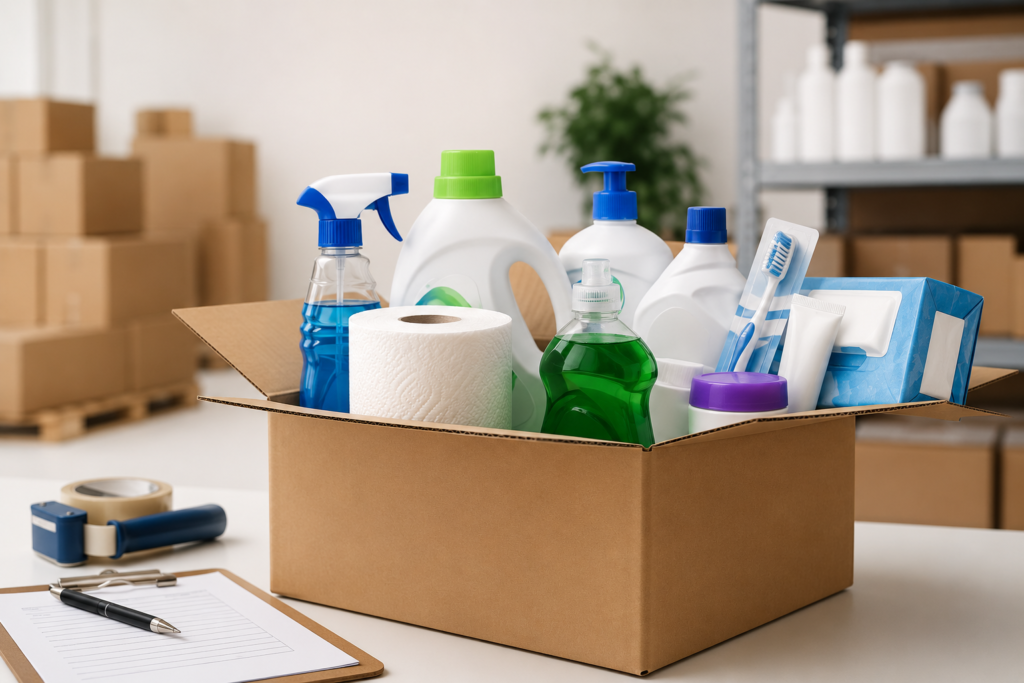
The category may include products such as:
- Household cleaning products
- Laundry and fabric-care items
- Paper and disposable goods
- First-aid supplies
- Oral-care products
- Personal hygiene items
- Home health products
- Vitamins and wellness products
- Medical accessories
- Pest-control products
- Air fresheners and odor-control items
- Everyday household essentials
Not every item within the category carries the same level of risk. A simple household accessory may have different requirements from a topical health product, supplement, disinfectant, aerosol, battery-powered device, or item containing regulated ingredients.
For this reason, sellers should evaluate every product individually instead of assuming that approval for one Health & Household item applies to the entire category.
AI Snippet Answer: What Makes a Health & Household Product Suitable for Amazon FBA?
A suitable Health & Household wholesale product should have stable demand, manageable competition, acceptable margins, reliable replenishment, accurate packaging, sufficient shelf life where applicable, clear supplier documentation, and no unresolved selling restrictions.
The product should also match the Amazon listing exactly and be suitable for FBA storage, preparation, and shipping.
Why Health & Household Sourcing Matters for Amazon FBA Sellers
Health & Household products may come into direct contact with customers, their homes, food-preparation areas, skin, or personal-care routines. Customers may therefore be particularly concerned about authenticity, broken seals, leakage, expired inventory, damaged packaging, incorrect quantities, or products that differ from the listing.
A careful wholesale sourcing process helps sellers reduce avoidable risks.
Product Authenticity and Traceability
Amazon may ask a seller to provide information showing where inventory was purchased. A genuine product can still become difficult to defend when it was sourced through an unknown supplier or supported by incomplete documentation.
A traceable sourcing process should help answer:
- Who supplied the inventory?
- Is the supplier a legitimate business?
- Does the invoice identify the products clearly?
- Can the supplier be contacted?
- Do the received quantities match the invoice?
- Are the products new and intended for resale?
- Is additional brand or supply-chain documentation available?
Commercial invoices and supplier records do not guarantee Amazon approval. However, they may help support approval requests or authenticity reviews, depending on Amazon’s requirements.
Customer Safety and Product Condition
Some Health & Household products may contain liquids, chemicals, active ingredients, batteries, pressurized containers, sharp components, or materials that require special handling.
Inventory should be inspected for:
- Broken safety seals
- Leakage or moisture
- Crushed or opened packaging
- Missing warning labels
- Faded lot numbers
- Incorrect ingredients
- Expired or short-dated units
- Damaged caps, pumps, or containers
- Missing instructions
- Packaging that differs from the listing
Sellers should not send questionable products to FBA simply because the units are technically unused.
Listing Accuracy
A product must match the selected Amazon ASIN accurately.
Compare the physical product with the detail page, including:
- Brand name
- Product title
- UPC, EAN, or GTIN
- Model number
- Size or volume
- Pack quantity
- Scent, flavor, or variation
- Ingredient information
- Packaging design
- Country or language version
- Included accessories
- Expiration information
A single item should not be listed against a multipack ASIN. Similarly, two products with similar packaging may have different formulas, sizes, scents, or model numbers.
Amazon Account Health
Poor sourcing decisions can lead to authenticity complaints, restricted-product issues, listing removals, customer complaints, stranded inventory, or requests for documentation.
As discussed in our previous Amazon account health guide for wholesale FBA sellers, account protection begins before inventory is purchased. Verifying the supplier, checking eligibility, matching the listing, and maintaining original records can help sellers build a cleaner sourcing history.
Step-by-Step Health & Household Wholesale Sourcing Guide
Step 1: Choose a Specific Product Type
Avoid beginning with the broad goal of selling “health products” or “household products.” Start with a specific subcategory.
For example:
- Laundry products
- Household cleaners
- Dental-care products
- Paper goods
- First-aid accessories
- Personal hygiene products
- Air-care items
- Home health accessories
A focused starting point makes it easier to compare demand, restrictions, suppliers, fees, competition, shipping requirements, and storage risks.
New sellers may find it easier to begin with durable, non-fragile products that do not contain complicated ingredients, batteries, aerosols, liquids, or short expiration dates.
Step 2: Research the Exact ASIN
Search for the exact product in Seller Central before contacting a distributor or placing an order.
Check whether:
- Your account is eligible to sell the product
- The listing displays “Apply to Sell”
- Brand approval is required
- Compliance documents are requested
- The product can be fulfilled through FBA
- Dangerous-goods review may apply
- The item has expiration-date requirements
- The listing has unresolved restrictions
- Special preparation is required
Do not buy inventory based only on third-party sales estimates. Seller eligibility can differ between ASINs from the same brand.
Step 3: Verify the Wholesale Distributor
A professional-looking website or price list is not enough to verify a supplier.
Review the distributor’s:
- Legal business name
- Physical business address
- Business phone number
- Professional email address
- Website and company information
- Product categories
- Invoice format
- Minimum order requirements
- Payment methods
- Shipping process
- Return and damage policy
- Brand relationships where available
- Ability to answer product questions
The supplier should be reachable and able to explain how its ordering and invoicing process works.
Sellers can learn more about Nations Distributor’s background and wholesale approach through the company’s About Us page.
Step 4: Confirm Product Authenticity
Ask whether the inventory is genuine, new, unopened, and intended for commercial resale.
Depending on the product, request information about:
- Product source
- Manufacturer or brand
- Batch or lot numbers
- Expiration dates
- Case-pack quantities
- Packaging condition
- Storage conditions
- Shipping requirements
- Available authorization documents
- Country or market version
Not every wholesale product comes with a direct brand authorization letter. Where brand authorization or additional supply-chain documentation is necessary, confirm its availability before placing an order.
Step 5: Review the Wholesale Invoice
A proper commercial invoice should normally include:
- Supplier’s legal business name
- Supplier’s physical address
- Supplier contact information
- Buyer’s legal business name
- Buyer’s business address
- Invoice number
- Invoice date
- Clear product descriptions
- Brand names or product identifiers
- Quantities purchased
- Unit prices
- Order total
- Payment or transaction information
The buyer information should match the legal business details connected to the Amazon seller account wherever possible.
An invoice may help support an approval request, depending on Amazon’s requirements, but it does not guarantee category, brand, or ASIN approval.
Step 6: Check Expiration Dates and Lot Codes
Selected Health & Household products may include expiration dates, manufacture dates, best-before dates, or lot numbers.
Before ordering, ask:
- What is the remaining shelf life?
- Is the date visible on every unit?
- Are units from multiple batches included?
- Will sufficient shelf life remain after shipping?
- Is the date printed permanently or added by a sticker?
- Does Amazon have product-specific expiration requirements?
Avoid buying large quantities of short-dated inventory simply because the wholesale price is attractive.
Our grocery wholesale sourcing guide also explains why shelf life, storage, and inventory turnover should be reviewed before purchasing date-sensitive products.
Step 7: Calculate the Complete Cost
A profitable wholesale calculation should include more than the supplier’s unit price.
Calculate:
- Wholesale product cost
- Distributor shipping
- Prep-center charges
- Product labeling
- Poly bagging or protective packaging
- FBA referral and fulfillment fees
- Inbound placement or shipping costs
- Monthly storage fees
- Long-term storage risk
- Damaged or unsellable units
- Customer returns
- Advertising costs
- Software and operating expenses
Use a realistic expected selling price rather than the highest recent price on the listing. Health & Household listings can experience price changes when new sellers enter, inventory levels change, or brands run promotions.
Step 8: Start With a Manageable Order
A smaller opening order allows you to test:
- Actual sales speed
- Buy Box stability
- Product condition
- Prep requirements
- Customer return reasons
- Packaging quality
- Distributor communication
- Reordering reliability
- Price fluctuations
A large order may produce a lower unit cost, but it also increases exposure if the listing becomes restricted, the price falls, or the inventory sells more slowly than expected.
Step 9: Inspect Inventory Before FBA Shipment
When inventory arrives, compare the shipment with the invoice and purchase order.
Check:
- Unit quantity
- Case-pack quantity
- Barcodes
- Product variation
- Packaging version
- Safety seals
- Expiration dates
- Lot information
- Leakage
- Damage
- Missing labels
- Listing compatibility
Take clear photographs of the products, outer cartons, labels, lot numbers, and any damage. Report discrepancies to the distributor promptly and keep the communication.
Step 10: Organize Your Sourcing Records
Create a digital folder for every supplier or purchase order.
Save:
- Original invoice
- Purchase order
- Payment confirmation
- Bank or card transaction
- Shipment tracking
- Receiving report
- Product photographs
- Packaging photographs
- Supplier emails
- Brand documents where available
- ASIN and SKU information
- Prep records
- FBA shipment details
- Return or damage communication
Good recordkeeping can help sellers locate relevant documents quickly when responding to a supplier question, product complaint, approval request, or account notification.
Common Health & Household Sourcing Mistakes to Avoid
Purchasing Before Checking Eligibility
Do not assume an active Amazon listing means your account can sell the product. Check the exact ASIN first.
Choosing a Supplier Only Because of Price
An unusually low price may come with weak documentation, damaged packaging, limited shelf life, or an unclear supply chain.
Ignoring Product Variations
Different scents, sizes, formulas, counts, packaging versions, and country editions may belong to separate ASINs.
Using Retail Receipts as Wholesale Invoices
Retail receipts may not contain the complete buyer, supplier, product, quantity, and transaction details commonly shown on commercial wholesale invoices.
Editing Invoice Information
Do not change dates, quantities, addresses, product descriptions, or supplier information on an invoice. Keep the original document provided for the transaction.
Ordering Too Much Too Soon
A product’s sales rank or current Buy Box price can change. Begin with an order size that reflects your budget, research, and risk tolerance.
Assuming an Invoice Guarantees Ungating
An invoice is supporting documentation. Amazon makes approval decisions according to its current requirements, which may vary by brand, ASIN, seller account, category, and marketplace.
How a Verified Wholesale Distributor Can Help
A structured wholesale distributor can make sourcing more organized by providing clearly identified products, commercial invoices, business contact details, case-pack information, and consistent transaction records.
A distributor may help sellers with:
- Access to wholesale product categories
- Product availability information
- Detailed commercial invoices
- Case-pack and quantity details
- Shipping documentation
- Minimum-order information
- Account-opening procedures
- Product records where available
- More traceable purchasing records
Working with a wholesale distributor does not guarantee profitability, ungating, or Amazon approval. However, it can help sellers keep better sourcing records and avoid buying through unknown or difficult-to-verify sources.
Sellers can explore wholesale opportunities and available categories through the Nations Distributor website.
Final Thoughts
Successful Health & Household wholesale sourcing requires more than finding a product with demand and a low supplier price.
Before purchasing inventory, confirm that you can sell the exact ASIN, research product restrictions, verify the distributor, inspect packaging and expiration information, request a complete invoice, calculate total costs, and organize your original records.
The most important question is not simply, “Can I make money on this product?” It is also, “Can I verify the supplier, product, transaction, and listing?”
Ready to explore authentic wholesale sourcing opportunities? You can apply for a wholesale account, review the available product categories, or contact the wholesale team with questions about products, invoices, minimum orders, and account requirements.
Frequently Asked Questions
1. Can I sell Health & Household products through Amazon FBA?
Eligible sellers may sell many Health & Household products through FBA. However, selected products may require approval, compliance documents, dangerous-goods review, expiration-date information, or special preparation. Check the exact ASIN in Seller Central before ordering.
2. What documents should I request from a Health & Household distributor?
Request an original commercial invoice showing the supplier, buyer, products, quantities, invoice date, prices, and transaction details. Depending on the product, additional brand, safety, compliance, ingredient, or supply-chain documents may also be required.
3. Can a wholesale invoice help with Amazon ungating?
A complete invoice from a legitimate and traceable supplier may help support an approval request, depending on Amazon’s requirements. It does not guarantee brand, category, or ASIN approval.
4. How do I check whether a product matches an Amazon listing?
Compare the physical product’s brand, barcode, model, size, pack count, formula, scent, packaging, expiration information, and included items with the Amazon listing. Do not send inventory to FBA when important details do not match.
5. Should beginners place large wholesale orders?
A manageable test order is generally safer for a new product. It allows the seller to evaluate sales speed, pricing, packaging, return rates, preparation needs, restrictions, and supplier performance before purchasing a larger quantity.