For Amazon sellers, finding a profitable product is only one part of the wholesale journey. The bigger question is: where are you sourcing that product from?
Many beginner Amazon FBA sellers focus only on price, profit margin, and sales rank. But experienced wholesale sellers know that supplier quality matters just as much as product demand. A low-cost supplier may look attractive at first, but if the products are not authentic, the invoices are incomplete, or the supplier cannot be verified, it can create serious problems for your Amazon business.
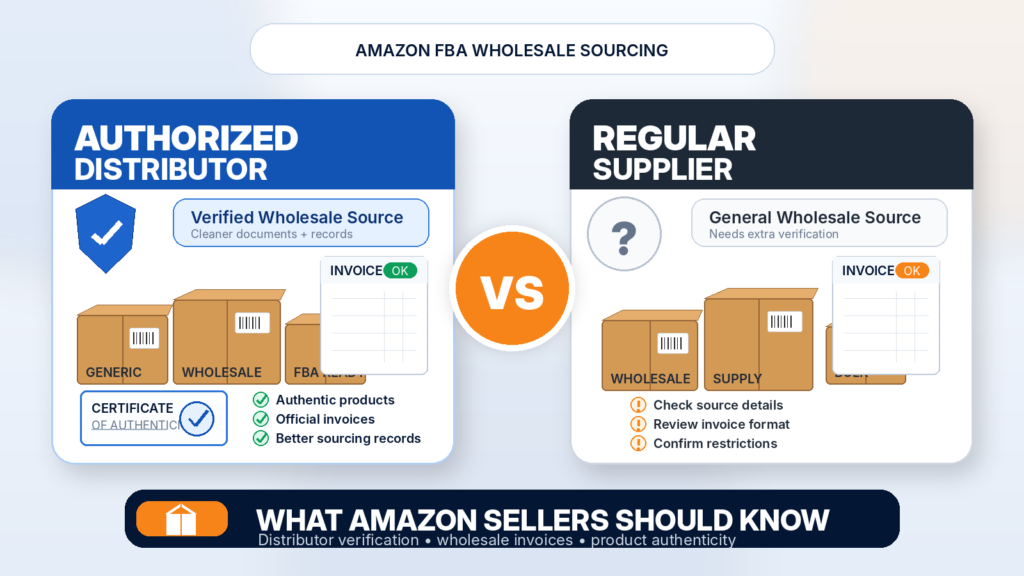
That is why understanding the difference between an authorized distributor vs regular supplier is so important.
In our previous guide on how to avoid fake wholesale suppliers for Amazon FBA, we explained how sellers can protect themselves from suspicious suppliers and risky sourcing offers. This article goes one step further by helping you understand why authorized distribution, proper invoices, and supplier verification matter for long-term Amazon FBA success.
Nations Distributor also highlights the importance of sourcing directly from brand owners or authorized distributors because Amazon may request proof of authenticity from sellers.
Quick Answer
An authorized distributor is a supplier that has a direct or approved relationship with a brand, manufacturer, or official distribution network. A regular supplier may sell wholesale products, but they may not always have brand authorization, complete documentation, or a clear supply chain.
For Amazon sellers, working with an authorized distributor can help sellers keep better sourcing records, receive more professional invoices, and reduce the risk of product authenticity concerns. However, Amazon approval or ungating is never guaranteed, and requirements may vary by category, brand, and marketplace. Amazon states that invoices may be used to verify that sellers are sourcing from legitimate suppliers.
What Is an Authorized Distributor?
An authorized distributor is a wholesale supplier that is approved to distribute products from a brand, manufacturer, or official supply chain. This does not always mean the distributor owns the brand. Instead, it means the distributor has a recognized relationship that allows them to supply genuine products through proper wholesale channels.
For Amazon sellers, an authorized distributor usually provides:
- Authentic wholesale products
- Business invoices
- Clear company information
- Product details on invoices
- Reliable communication
- Repeatable sourcing opportunities
- Category-specific wholesale inventory
This type of supplier can be especially important for sellers working in categories such as beauty, personal care, grocery, health, household, baby products, and pet supplies. These categories often require extra care because Amazon may ask sellers for invoices, supplier details, or product authenticity documentation depending on the situation.
For example, if you are sourcing from the beauty category, you can also read this guide on Beauty & Personal Care wholesale sourcing for Amazon FBA. If you are sourcing pet products, this pet supplies wholesale sourcing guide for Amazon sellers can help you understand category-specific sourcing concerns.
What Is a Regular Supplier?
A regular supplier is any person or company that sells products in bulk or at wholesale pricing. Some regular suppliers are legitimate businesses, but they may not always be authorized by the brand or manufacturer.
A regular supplier may include:
- General wholesalers
- Small trading companies
- Online marketplace sellers
- Liquidation suppliers
- Local bulk sellers
- Closeout inventory sellers
- Importers without clear brand authorization
The issue is not that every regular supplier is bad. Many regular suppliers can be real businesses. The problem is that Amazon sellers need more than just products. They need clean sourcing records, professional invoices, and confidence that the product supply chain is legitimate.
If a supplier cannot provide proper invoices, cannot explain where the inventory comes from, or avoids basic verification questions, that can be a red flag.
Authorized Distributor vs Regular Supplier: Main Differences
The biggest difference between an authorized distributor and a regular supplier is the quality of the supply chain.
1. Product Authenticity
An authorized distributor is more likely to supply genuine products through approved wholesale channels. This matters because Amazon takes product authenticity seriously. Amazon’s Seller Central guidance says sellers may be asked to submit invoices from suppliers or provide supplier contact information.
A regular supplier may still sell authentic products, but sellers need to verify the source carefully. If the supplier bought products from another reseller, liquidation source, or unknown channel, the documentation may not be strong enough for Amazon’s review process.
2. Invoice Quality
Amazon sellers often need invoices for ungating requests, authenticity reviews, or account health issues. A strong wholesale invoice should normally include:
- Supplier business name
- Supplier address and contact details
- Buyer business name
- Buyer address
- Invoice date
- Product names or descriptions
- Quantities purchased
- Invoice number
- Clear and unaltered details
Amazon recommends reviewing invoice documentation for supplier details, buyer details, issue dates, product descriptions, and purchase quantities.
Authorized distributors are usually better prepared to issue professional wholesale invoices. Regular suppliers may provide receipts, screenshots, packing slips, or informal documents that may not be enough depending on Amazon’s requirements.
3. Brand Authorization
Brand authorization means the supplier has permission or an approved relationship to distribute a brand’s products. This can help Amazon sellers show a more reliable sourcing path.
However, sellers should understand one important point: a wholesale invoice does not always mean automatic brand approval.
Amazon’s requirements may vary by category, ASIN, brand, and marketplace. A distributor invoice may help support approval requests, but it does not guarantee ungating or selling permission.
4. Account Health Protection
Poor sourcing can create account health problems. If a customer complains that a product is fake, expired, used, damaged, or not as described, Amazon may ask for proof of sourcing. If your supplier cannot be verified, it can become difficult to respond properly.
Working with a verified wholesale distributor can help sellers maintain better records, but sellers should still check every product carefully before listing.
5. Long-Term Sourcing Stability
Regular suppliers may offer one-time deals or random inventory. That can be useful in some business models, but Amazon wholesale sellers usually need repeatable products, consistent pricing, and reliable restocking.
Authorized distributors are often a better fit for sellers who want to build a more stable wholesale business instead of chasing random deals.
Why This Matters for Amazon FBA Sellers
Amazon FBA is not only about sending inventory to a fulfillment center. Your sourcing decisions can affect your listings, account health, approval requests, customer trust, and long-term business growth.
Here is why this topic matters:
Amazon May Request Proof
Amazon can ask sellers for invoices, supplier details, or other documentation. If you do not have proper records, you may struggle to respond.
Some Categories Are More Sensitive
Categories like beauty, personal care, grocery, health, household, baby, and pet supplies require careful sourcing because products may have expiration dates, safety concerns, packaging requirements, or brand restrictions.
Fake Suppliers Are Common
Many new sellers are targeted by fake wholesale suppliers who promise cheap inventory, guaranteed approval, or unrealistic profit margins. These offers can look professional but still be risky.
Approval Is Not Guaranteed
Even when you buy from a verified distributor, Amazon may still review your documents based on its own rules. That is why sellers should avoid any supplier claiming “guaranteed ungating” or “guaranteed Amazon approval.”
Better Records Help Better Decisions
When your invoices, supplier communication, and product research are organized, you can make smarter sourcing decisions and respond more professionally if Amazon asks questions.
Step-by-Step Practical Guide for Choosing the Right Supplier
Step 1: Check Your Business Goal
Before contacting a supplier, decide what you need. Are you trying to source beauty products, pet supplies, grocery items, or general household products? Different categories may have different Amazon requirements.
Step 2: Research the Supplier
Look for basic business details such as:
- Company website
- Business address
- Contact number
- Business email
- Product categories
- Application process
- Wholesale terms
- Supplier reputation
A real distributor should not hide basic business information.
Step 3: Ask About Product Source
Ask whether the supplier works with brands, manufacturers, or authorized distribution channels. You do not need aggressive questioning, but you should understand how the supplier gets inventory.
A simple question can help:
“Can you confirm whether your products are sourced through authorized wholesale or distribution channels?”
Step 4: Review the Invoice Format
Before placing a large order, ask what information appears on the invoice. Make sure the invoice is a business invoice, not just a payment receipt.
A good invoice may help support Amazon approval requests depending on Amazon’s requirements, but sellers should not treat any invoice as a guarantee.
Step 5: Start With a Careful Order
Do not rush into a large purchase. Review product condition, packaging, expiration dates, brand restrictions, and FBA requirements before scaling.
Step 6: Match Products With Amazon Listings
Before sending inventory to FBA, check:
- Brand name
- UPC/EAN
- Product size
- Pack count
- Variation
- Label
- Images
- Expiration date
- Restricted status
Many sellers make mistakes by buying the right brand but the wrong size, bundle, or packaging version.
Step 7: Keep All Records
Save invoices, payment confirmations, supplier emails, product photos, shipping records, and any authorization documents. These records can help sellers stay organized if Amazon requests more information.
Common Mistakes to Avoid
Mistake 1: Choosing Only the Cheapest Supplier
Cheap pricing is not enough. If the supplier cannot verify the product source or provide proper invoices, the deal may not be worth the risk.
Mistake 2: Believing “Guaranteed Ungating” Claims
No supplier should promise guaranteed Amazon approval. A distributor invoice may help support approval requests, but Amazon makes its own decisions.
Mistake 3: Using Retail Receipts as Wholesale Invoices
Retail receipts are not the same as wholesale invoices. Amazon may require specific invoice details depending on the issue or approval request.
Mistake 4: Ignoring Brand Restrictions
Just because a product is profitable does not mean you are allowed to sell it. Always check restrictions in Seller Central before buying inventory.
Mistake 5: Not Checking Expiration Dates
This is especially important for grocery, beauty, health, household, baby, and pet products. Products with short shelf life can create FBA problems.
Mistake 6: Buying From Unknown Online Sellers
If a supplier is only communicating through social media, has no business address, and refuses to provide company details, be careful.
Mistake 7: Not Comparing Product Details
A small mismatch in size, pack count, or barcode can lead to listing errors, customer complaints, or stranded inventory.
How a Verified Wholesale Distributor Can Help
A verified wholesale distributor can help Amazon sellers build a more professional sourcing process. Instead of buying random products from unknown suppliers, sellers can work with a company that understands wholesale needs, documentation, and ecommerce sourcing.
Nations Distributor works with Amazon FBA sellers and offers wholesale categories such as beauty and personal care, pet supplies, grocery, health and household, baby products, and more. The website also provides an application process for wholesale account access, including business details, industry focus, EIN/taxpayer ID, seller’s permit or resale certificate, and billing/shipping information.
A distributor can help sellers by providing:
- Access to wholesale product categories
- More organized sourcing communication
- Professional wholesale account setup
- Better inventory planning
- Clearer product documentation
- Category-focused sourcing support
If you are ready to explore wholesale sourcing, you can apply for a wholesale account with Nations Distributor. If you have questions before applying, you can also contact Nations Distributor for more information. Their contact page explains that sellers can apply for a wholesale account or ask questions about Amazon FBA wholesale supplies.
You can also learn more about the company on the About Us page or visit the Nations Distributor homepage to explore available information and product categories.
Final Thoughts
Choosing between an authorized distributor and a regular supplier is not just a small sourcing decision. It can affect your Amazon account health, product authenticity records, invoice quality, and long-term wholesale strategy.
A regular supplier may offer attractive pricing, but sellers must verify the source carefully. An authorized distributor can provide a stronger foundation for Amazon FBA sellers who want authentic products, better documentation, and more reliable wholesale sourcing.
The best approach is simple: do not rush, do not trust unrealistic promises, and do not buy inventory without checking the supplier, invoice format, product details, and Amazon restrictions.
If you want to source authentic wholesale products from a verified distributor, you can apply for a wholesale account, explore relevant product categories on Nations Distributor, or contact the distributor to ask questions before getting started.
FAQs
1. What is the difference between an authorized distributor and a regular supplier?
An authorized distributor has an approved or recognized relationship with a brand, manufacturer, or official supply chain. A regular supplier may sell products in bulk but may not always have brand authorization or complete documentation.
2. Do Amazon sellers need authorized distributors?
Amazon sellers do not always need an authorized distributor for every product, but working with one can help sellers maintain better sourcing records, receive professional invoices, and reduce authenticity-related risks.
3. Can an authorized distributor invoice help with Amazon ungating?
Yes, a proper wholesale invoice from an authorized distributor may help support approval requests, depending on Amazon’s requirements. However, it does not guarantee ungating or approval.
4. Is a retail receipt the same as a wholesale invoice?
No. A retail receipt usually shows a consumer purchase, while a wholesale invoice includes supplier and buyer business details, product descriptions, quantities, invoice date, and other information that may be required by Amazon.
5. How can I verify a wholesale supplier for Amazon FBA?
Check the supplier’s business website, address, contact details, product categories, invoice format, authorization status, and wholesale application process. Avoid suppliers that make unrealistic guarantees or refuse to provide basic company information.